
WHEN DID WE START TREATING THIRST AS HUNGER? 🤔
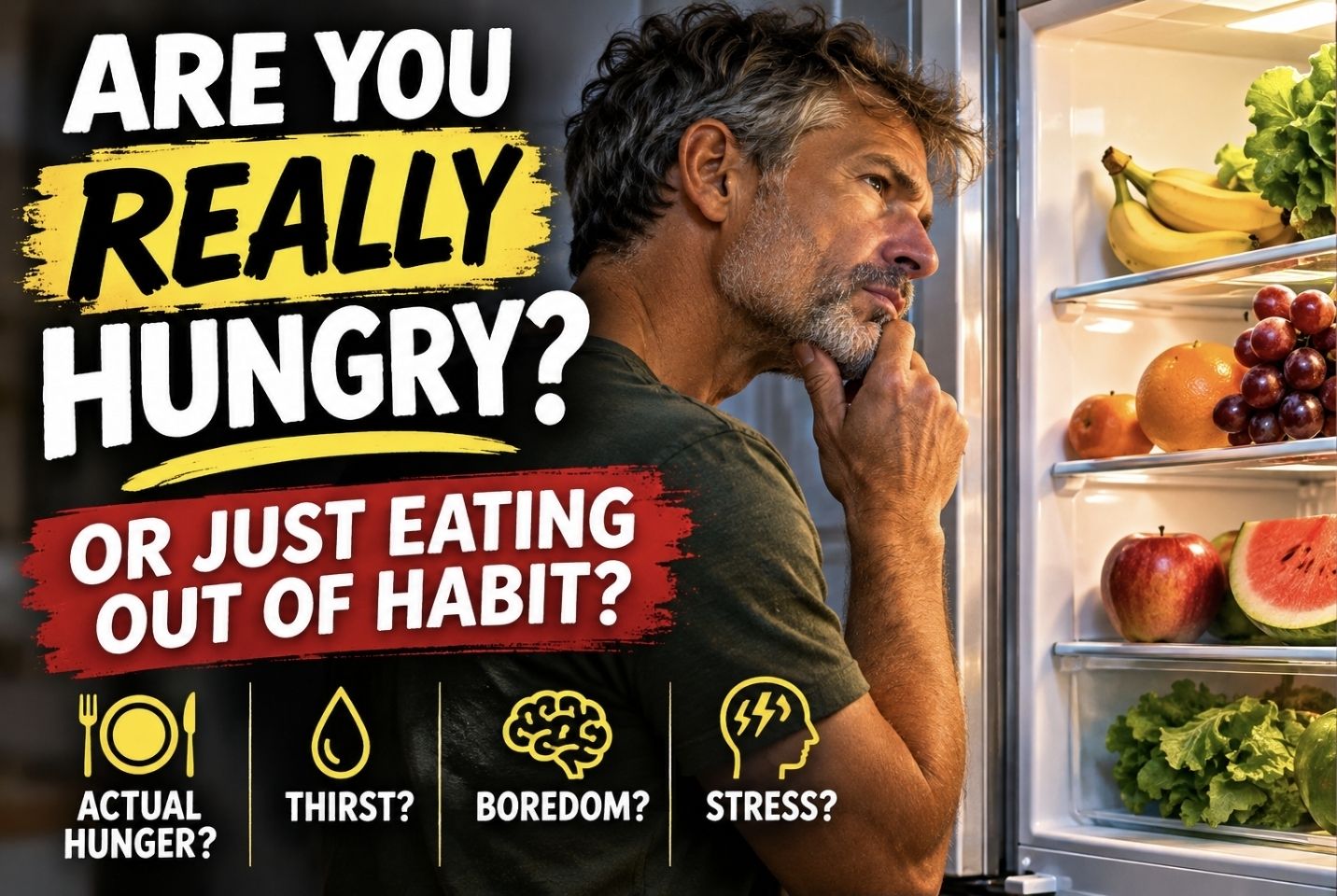
Have you ever walked into the kitchen, opened the fridge, stared at everything inside and realised you don’t actually fancy anything?
Yet five minutes later, you’re eating something.
I’ve done it myself.
And it raises an interesting question.
How often do we eat without understanding what our body is actually asking for?
Sometimes we’re genuinely hungry.
Other times we’re bored, stressed, tired or simply looking for something to do.
And sometimes we might actually be thirsty.
The signals for hunger and thirst aren’t identical, but they can be surprisingly easy to misinterpret when we’re distracted or eating out of habit.
Think about how we live today.
We’re surrounded by food.
It’s advertised everywhere, available almost instantly and often deliberately designed to make us want more.
You can finish a perfectly satisfying meal and still find yourself reaching for something sweet.
Is that genuine hunger?
Or has your brain simply learnt to expect a particular taste after eating?
Here’s something I’ve noticed since changing my diet.
The simpler my food became, the easier it was to recognise when I genuinely wanted to eat.
And when I stopped constantly stimulating my taste buds with highly processed foods, my relationship with food changed.
But there’s another part of this that rarely gets discussed.
We spend years teaching children to ignore their natural signals.
“Finish everything on your plate.”
“You can’t leave the table until you’ve eaten.”
“Have something now because you won’t get anything later.”
How many of us grew up hearing those words?
And how many of us still eat that way as adults?
From a Natural Hygiene perspective, learning to recognise genuine hunger, satisfaction and thirst is an important part of understanding the body.
Of course, these signals aren’t infallible. Illness, medication, stress and other circumstances can affect them.
But that doesn’t mean we should ignore them altogether.
Perhaps one of the most useful things we can do is become more aware of why we’re eating.
Next time you find yourself wandering into the kitchen, ask yourself something.
Am I hungry?
Am I thirsty?
Or am I simply looking for something to occupy my mind?
You might be surprised by the answer.
Here’s my question for you.
How often do you find yourself eating when you’re not actually hungry?